
It’s official: Electric dirt bikes have a permanent home in the US Hard Enduro Championship. Here are all the latest details on USHE eMoto racing.
AMA-sanctioned electric hard enduro has finally become a reality. Nothing drives performance quite like competition, and a full-blown multi-regional hard-enduro series is as tough a contest as you could ask for.
The kickoff of the newly minted USHE eMoto championship might be the best news we’ve heard all year, but as is the case with any officially sanctioned race series, you’ll need to know how it works to get the most out of it, whether you’re planning on participating yourself or watching from the woods.
What is US Hard Enduro?
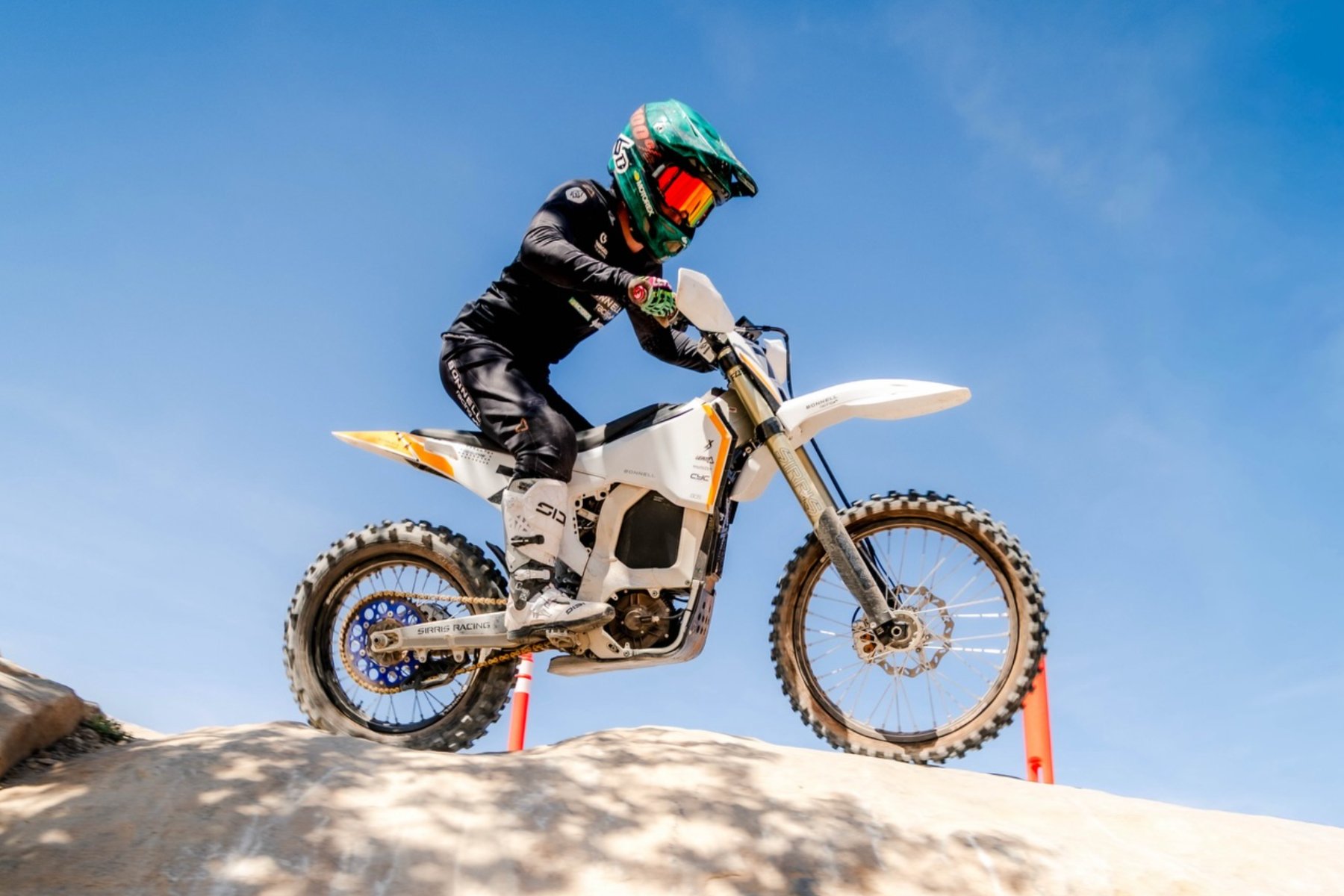
We’ll start with the basics: US Hard Enduro, aka USHE, is the promoting organizer that covers the three major events in the US hard enduro circuit. Those include the AMA East Championship, the AMA West Championship, and the AMA National Off-Road Championship.
USHE was founded back in 2021 with the singular goal of bringing top-tier hard enduro racing to the United States, and to do it as an American Motorcyclist Association (AMA) sanctioned body. The organization started with just a few yearly races, but has grown exponentially over the last few years and expanded its reach everywhere from Pennsylvania to Hawaii.
2026 marks the first year that USHE has designated specific classes and rules for eMoto. Here are all the latest nitty-gritty details for the championship.
USHE eMoto Classes Explained
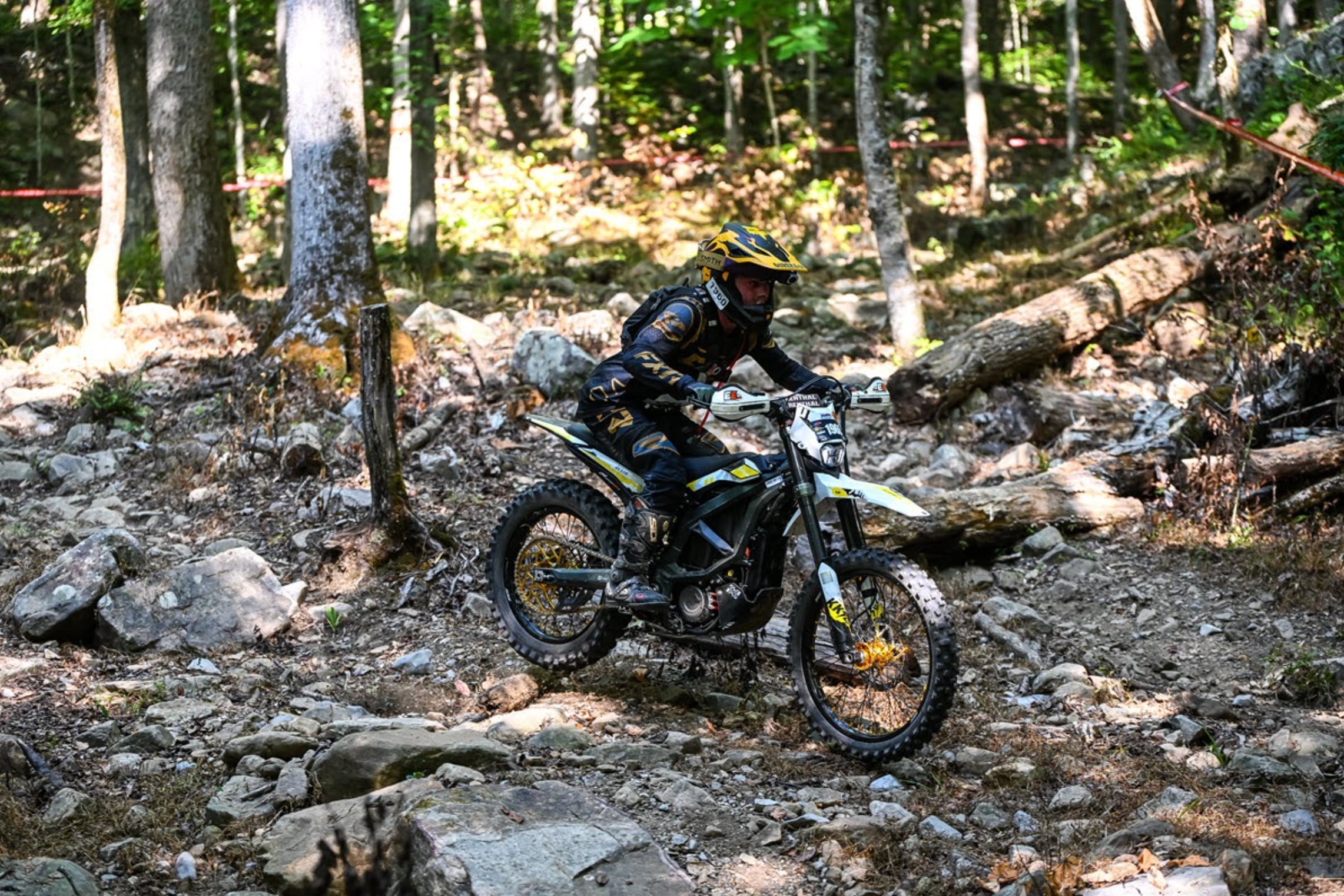
As it currently sits, there are two designated classes for US Hard Enduro eMoto. Both classes run at every round of every championship, and both classes stand to earn their own championship title and corresponding AMA #1 plate for the year.
The first class is dubbed the “eMoto Sportsman” class, and while there’s no such thing as “beginner-level” hard enduro, the Sportsman class serves as the entry-level starting point for the championship. Sportsman class riders can expect no shortage of technical obstacles, and can also expect to push their bikes through some of the tougher sections as well. Courses in this class are generally considered B to C level difficulty.
Our second class is the “eMoto Pro” class, which is reserved for pro and elite riders only. These riders will tackle a full pro-level course, which is substantially more difficult than what traditional “A” level riders are accustomed to.
The most important distinction to make here is that the eMoto Pro class is NOT open entry: those allowed to compete in eMoto Pro must show consistent top finishes in either A or Pro class racing, and must contact USHE for permission to race in the class. USHE’s main reason for this is safety, as underqualified riders on a pro course put everyone else at risk.
What Bikes are Eligible for USHE eMoto Racing?
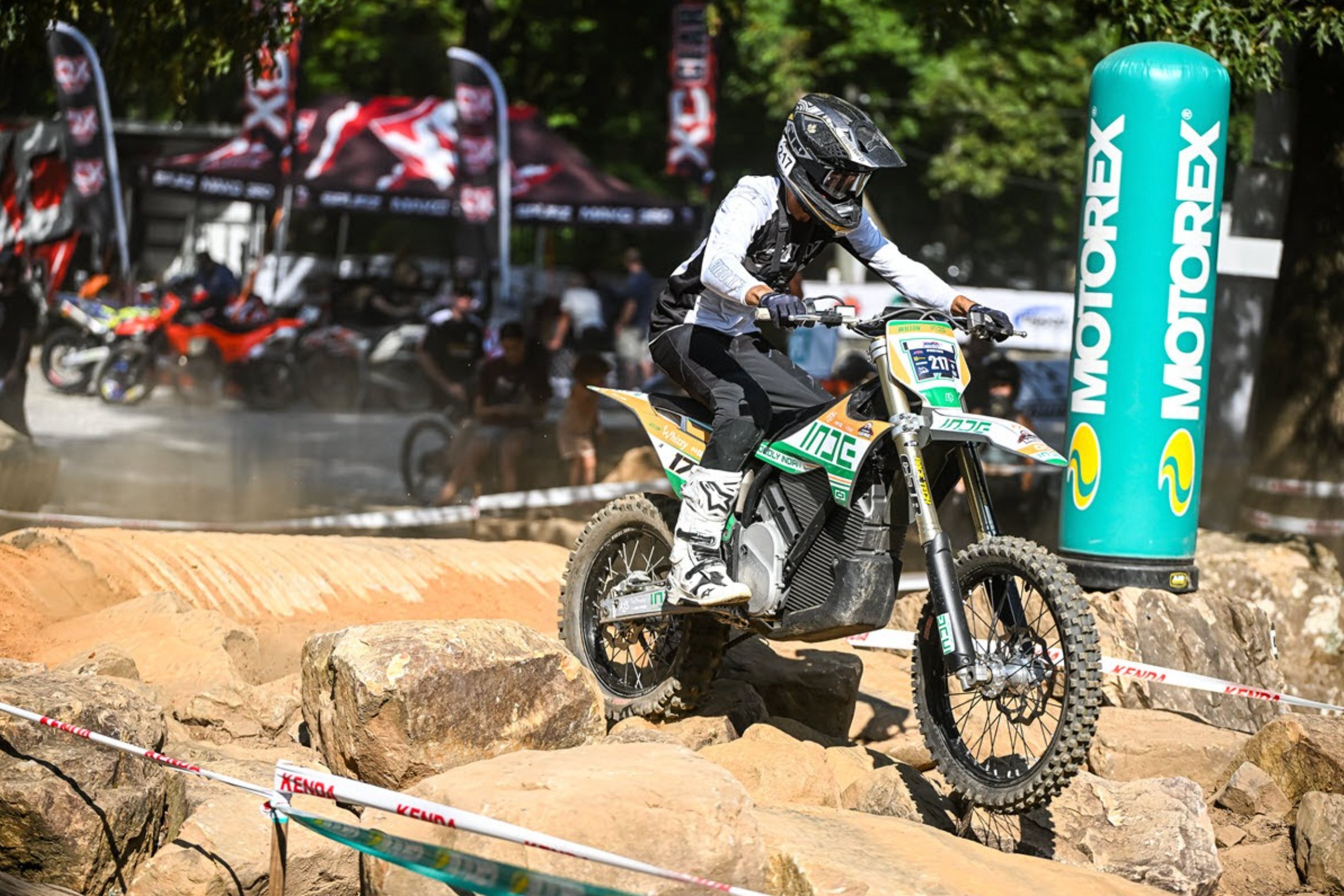
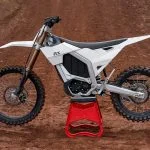
As of 2026, only a handful of models are allowed to compete in the USHE eMoto championship. Here’s the current lineup:
- KTM Freeride E-XC
- Stark Varg (MX and EX)
- Bonnell 805
- Bonnell 902
- Surron Ultra Bee
- Zero XE
Other high-end models, such as the Dust Moto Hightail, will likely be added in years to come, but as of 2026, these are the only vehicles allowed in the series.
What are the Technical Requirements for the USHE eMoto Class?
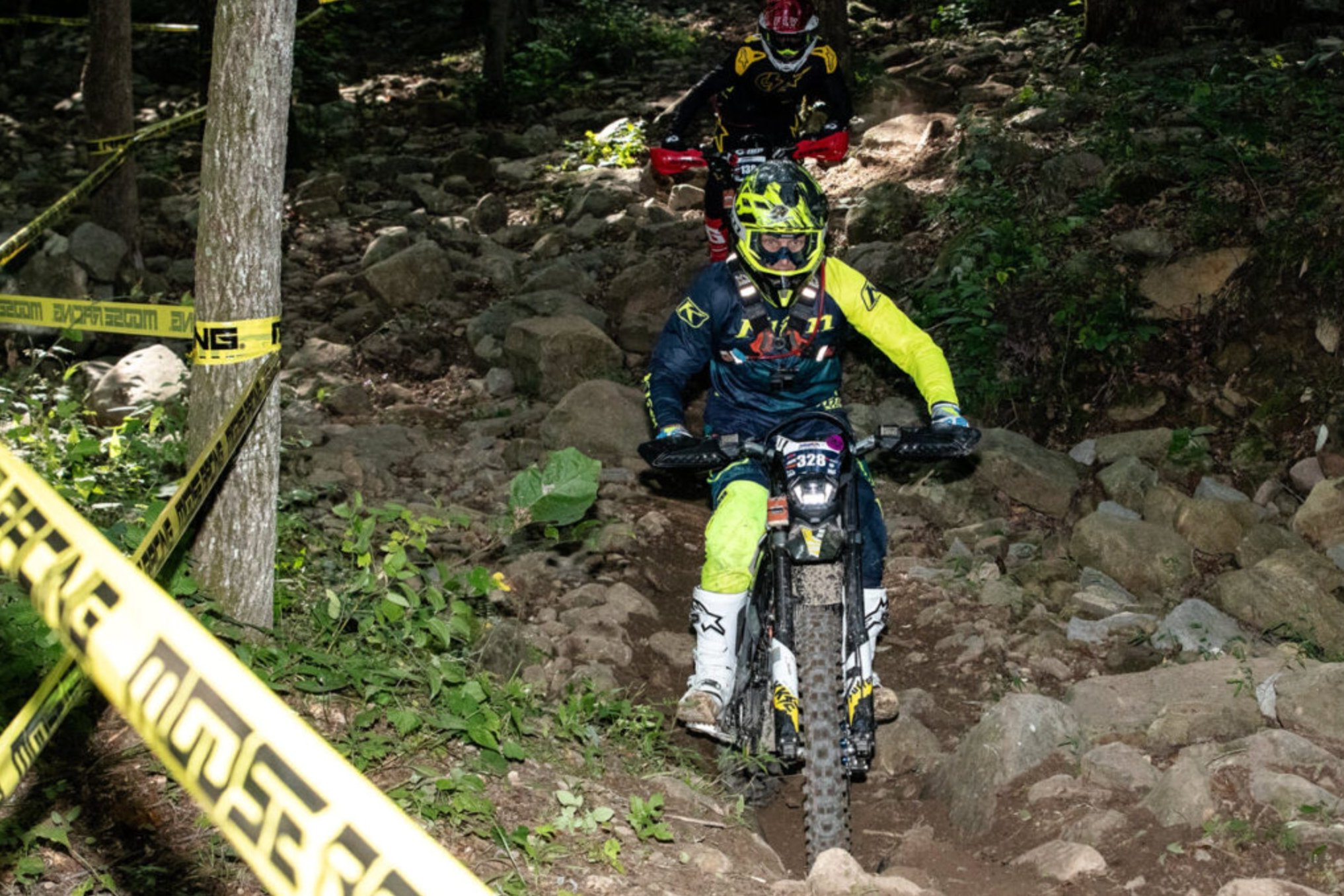
Assuming you’ve got one of the above models, you’ll still need to check a few technical boxes to be eligible to race:
- All eMotos must be equipped with a 21″ front wheel and an 18″ rear wheel
- The minimum wheelbase for any machine is 53 inches.
Aaaaand that’s it, for the time being at any rate. As you’d probably guess, this is why smaller bikes like the Surron Light Bee, Talaria, and E Ride Pro are excluded from the series. That also means that if you want to run a Surron Ultra Bee, you’ll have to upgrade it to a 21-inch front before you’ll be allowed to compete.
Course Formats and Race Difficulty
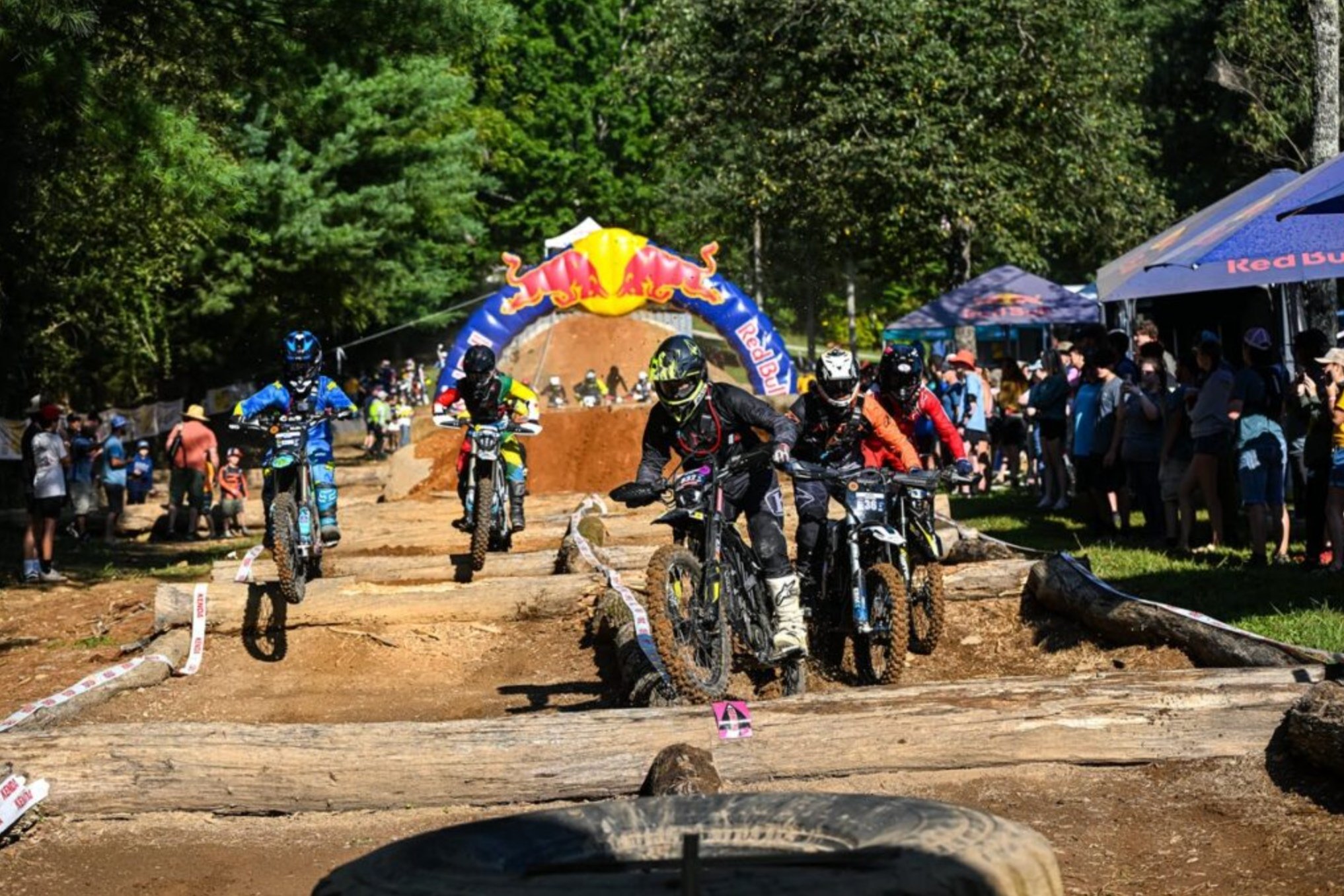
Race courses for the USHE eMoto Championship won’t be standardized, which means each race will have its own unique layout and format. Some will be knockout-style events, while others will include course splits based on difficulty levels (Pro / A / B / C).
That being said, USHE has provided some basic guidelines for what racers and fans can expect.
For instance, shorter courses will run 3-4 miles, while the typical course length will be between 8 and 12 miles. Long courses will be 13 miles and over, with tracks up to 20 miles as the upper limit. Races will run anywhere from 3 to 5 hours, depending on length and difficulty.
As for the terrain, racers can expect the same sort of challenging and highly variable conditions as standard ICE competitors. That includes hill climbs, rock sections, creeks, ravines, and a variety of “mixed traction” conditions ranging from sand to mud.
Battery Rules and Strategy
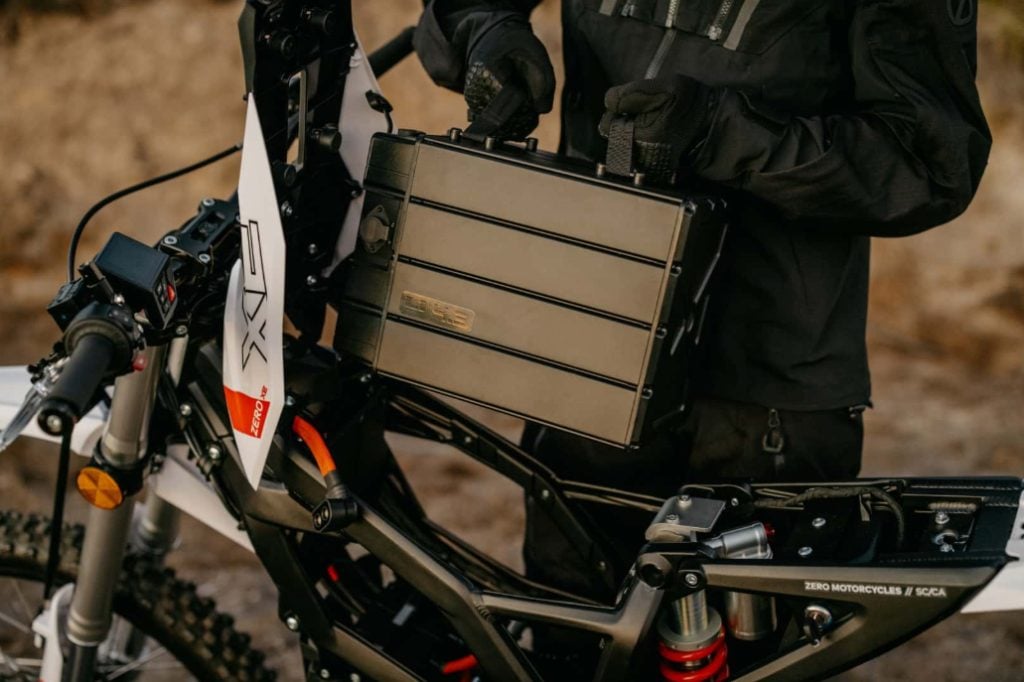
Battery swaps for the eMoto class are part of the program, but they’re only allowed in designated pit zones, or at the same areas as gas stops. These areas will be clearly indicated for each round.
USHE says that riders will be allowed to return to pit as needed, but the honor system dictates that they’ll need to return to the course wherever they left off.
Starting Row Rules

Standardized starting rules are a requirement of AMA, and the USHE eMoto class is no different. For 2026, eMoto competitors will start on a separate row behind all gas-powered classes.
After qualifying, eMoto riders will be mixed into the field of gas competitors based on their results.
Checkpoint Scoring System for USHE eMoto Racing
USHE has implemented a checkpoint-based scoring system for the eMoto class. This allows riders who fail to complete the full race to receive an official finish time. The aim here is to encourage participation and competition at all skill levels.
What You Need to Start Racing the USHE eMoto Championship
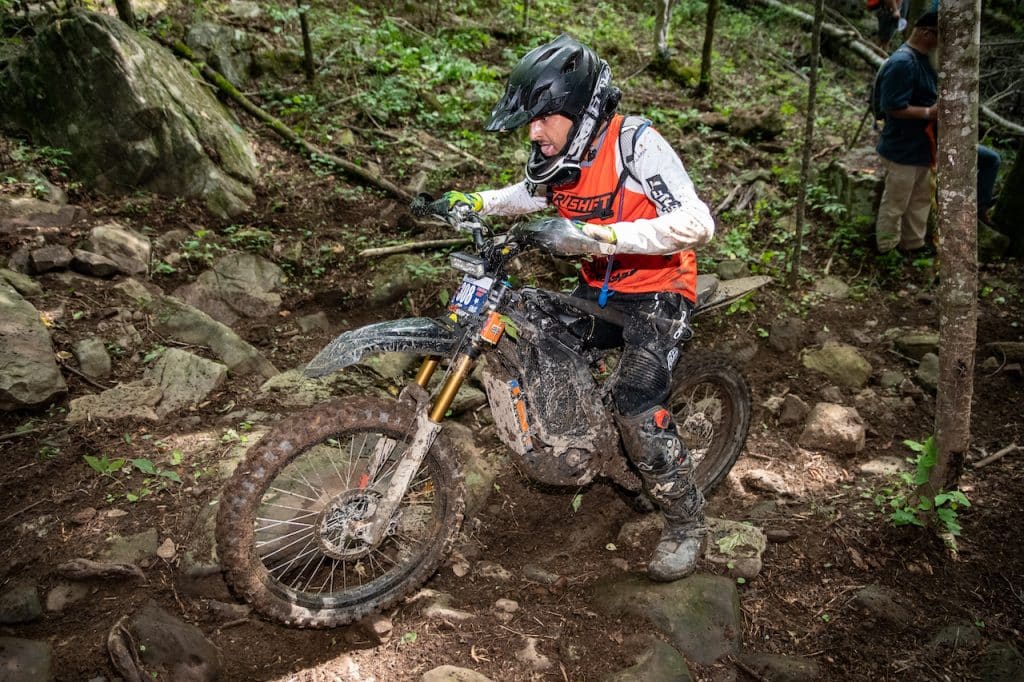
If you’re interested in competing yourself, you’ll have a few items to take care of before you can enter. The first, as this is an AMA sanctioned event, will be to acquire an American Motorcyclist Association membership. You can check out all the details and apply on their website.
The next order of business once you’ve obtained an official AMA membership will be to apply for a USHE series number. This will typically run you about $20, and can be done via the USHE website.
You’ll also need to sign up and register with MotoTally for access to the event scoring system. Once again, you can get all the details over on the MotoTally page.
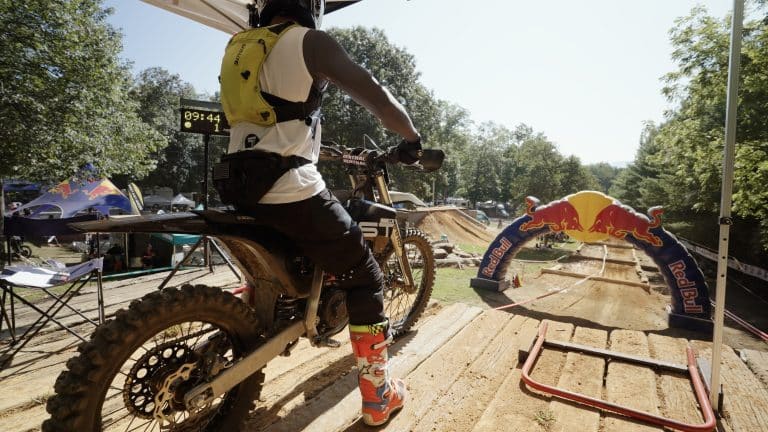
We’ll also note that for those of you who are planning to or have previously participated in the Redbull TKO ECR Hard Enduro Championship, this event is still separate from the USHE eMoto Championship and requires separate registration.
ECR Recommended Setup for Racing USHE eMoto
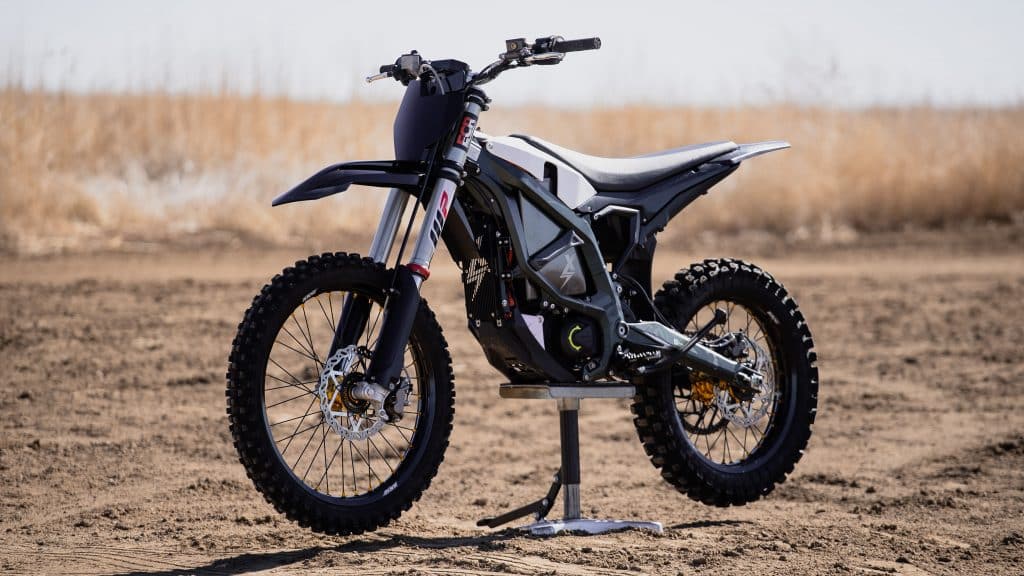
Speaking of TKO Hard Enduro, we’ve got a few recommendations on setup based on our own experience racing TKO and other enduro events on electric motorcycles.
First and foremost are tires: In our experience, gummy tires and soft mousses are the best fit for this type of racing. We strongly advise against any sort of tube setup to avoid pinch flats.
As for suspension, a softer setup does best on competitive enduro terrain. Tweaks will vary based on individual courses, but we’ve found softer settings make for better traction and compliance all around.
Protection-wise, you’re going to want a proper skid plate, rotor guards, and hand guards at a minimum. Durability upgrades of any kind are usually well worth the investment, which includes radiator guards, beefier controls, and stronger bars.
Speaking of radiators, a word on cooling: if your bike isn’t liquid-cooled from the factory, it’s a good idea to rig a fan for your motor/controller to maintain some airflow at slower speeds. Overheating can kill battery life and performance in short order, and you’re going to spend a fair amount of time painstakingly picking your way through gnarly terrain.
Upcoming USHE eMoto Events
While the 2026 USHE eMoto season is already well underway, there are still quite a few events remaining on the schedule. Here’s what’s left in the season as of May 2026:
- May 2-3: Battle of the Goats – Taylorsville, NC
- May 23-34: Locked N Loaded Hard Scramble – Sugarloaf, PA
- June 11-12: Donner Hard Enduro – Norden, CA
- June 26-27: Squamish Hard Enduro – Squamish, BC
- July 18-19: River Monster Hard Enduro – Glen Lyn, VA
- Aug 8-9: Hollow Point Hard Enduro – Wellsville, OH
- Aug 28-30: Red Bull Tennessee Knockout – Sequatchie, TN
- Sept 26-27: Fallen Timbers Hard Enduro – Little Hocking, OH
- Oct 25: Coal Cracker Smacker Hard Enduro – Good Spring, PA
For the current full list, details, and results, check out the USHE events schedule.