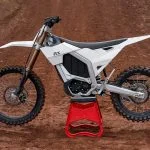
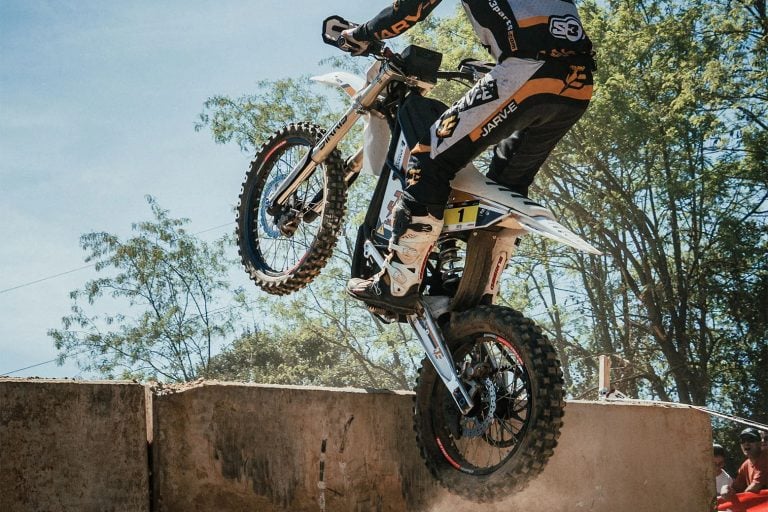

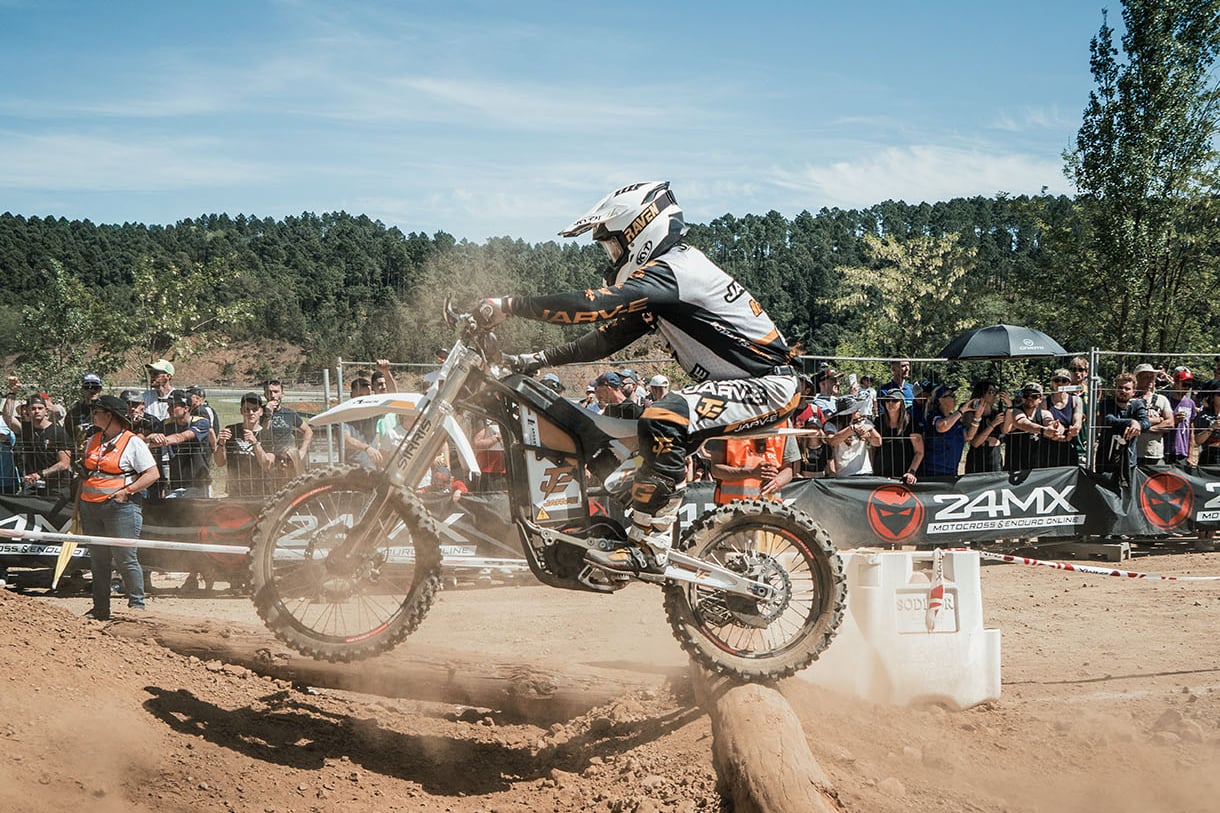
The launch of the new Jarv-E electric enduro was about as sudden and unexpected as they come. No year-long runup of social media teasers, no intrusive email marketing campaigns, and no seemingly endless fundraising cycles. Christmas came and went, and then, just before the new year, BLAM: The patron saint of hard enduro himself announces a 67-horsepower, 218-pound electric bike that’s built from the ground up specifically for hard enduro.
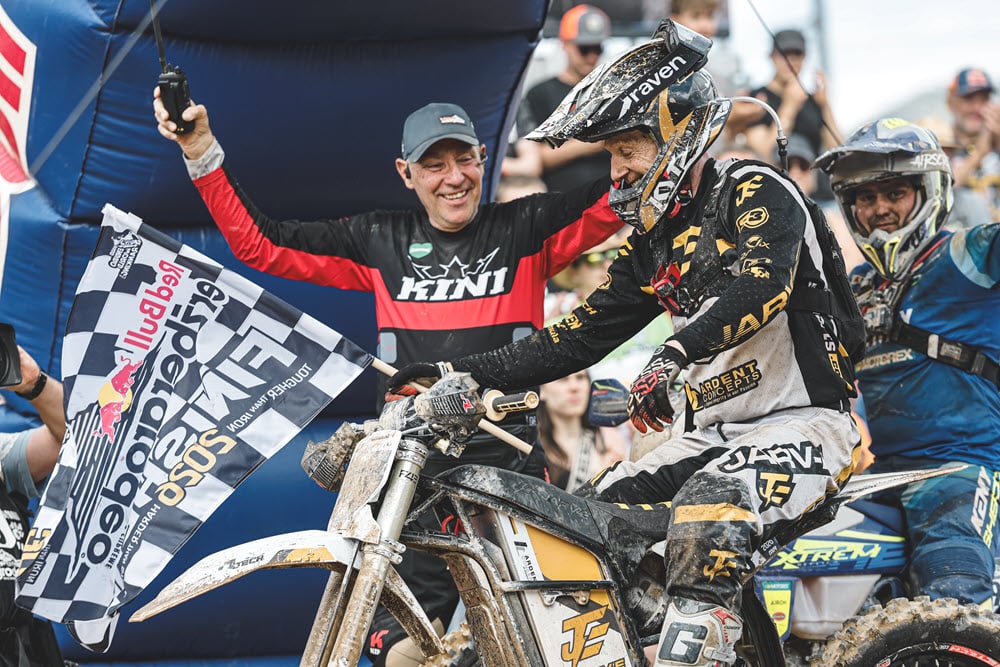
In the six months since, the bike has made the rounds both online and on the racing circuit. Jarvis himself has proven the bike means business by putting it through the wringer at Extreme XL Lagares and Erzbergrodeo, and wouldn’t you know it? The first production units are already scheduled to begin shipping before the end of the year. We know major OEMs that have teased new models for longer than that.
So where did the Jarv-E actually come from, and how did it all come together?
Well, during our recent sitdown with the man himself, Jarvis told us he actually started working on the idea way back in 2021. He had previously ridden prototypes he didn’t care for, but after running into David Freidinger and his hand-built EDURO prototype at a race, he knew he’d found his huckleberry for a proper collaboration.
You may not be familiar with Freidinger’s name, but chances are you’ve seen his work. The man’s been behind the scenes in motorsports for the better part of two decades as a specialist in chassis fabrication and geometry, and has touched everything from hard enduro to quad racing.
The EDURO bike had been David’s passion project for years, something he rode and raced as he developed it in real time. Freidinger’s original prototype had been a hand-built thing of beauty, but the design was constantly in flux. In its final iteration, the EDURO sported some diabolically premium spec, including a hand-built titanium frame and custom-tuned WP suspension.
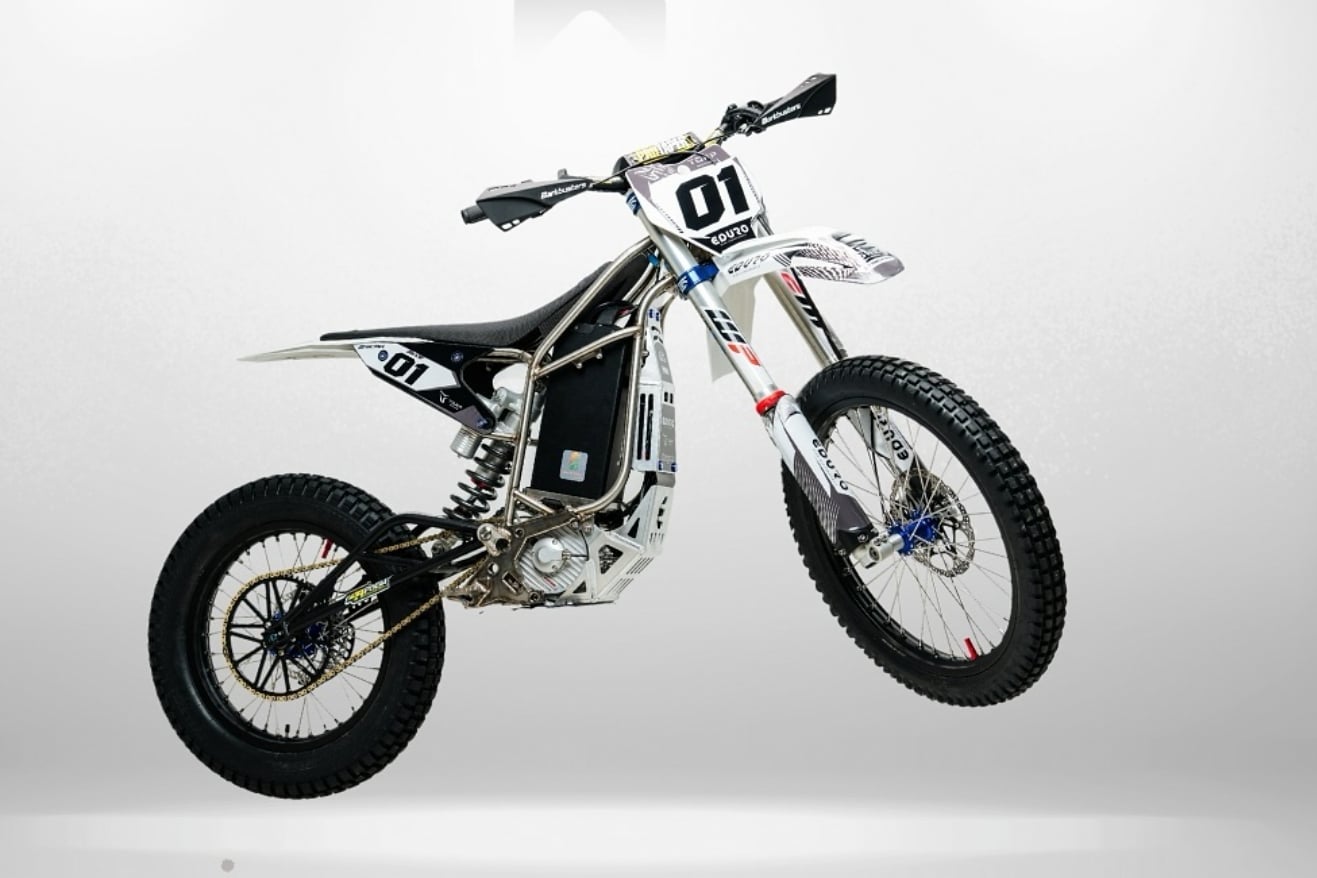
The EDURO project culminated in David taking a second-place finish at Redbull Romaniacs in 2025, at which point one can only assume Jarvis had seen all he needed to make the partnership official. The two have been working together ever since to refine the final product for both competition and production.
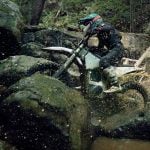
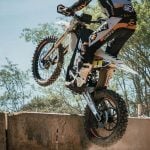
Jarvis says his inputs have impacted everything from chassis geometry and balance to power delivery and throttle sensitivity. Every inch of the bike is reportedly designed to excel in extreme enduro competition. In other words, it’s built for gnarly climbs, rock gardens, aggressive step-ups, and balance-intensive obstacles. According to the team at Jarv-E, the bike is tested to climb grades as steep as 45 degrees.
Final details are still somewhat limited, but here’s what we know for certain if you’re interested in owning one yourself:
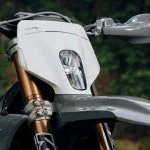
The titanium frame is gone, but a hand-welded chromoly steel version has taken its place, and it’s a thing to behold. Suspension components are now Sirris’ top-spec units, with a fully-adjustable F43 fork up front and a fully-adjustable R46 in the rear. A “race-spec” 21/18 enduro wheel setup will come as standard.
As for the electronics, the Jarv-E will get a 7.3 kWh battery, which the manufacturer claims can be swapped out in around 30 seconds. Ride time will vary depending on terrain and speed, but Jarv-E claims the “Super Eco” mode delivers up to 5 hours of riding, the standard “Mixed Enduro” mode is good for 3-4 hours, and the full-tilt “Fast Race” mode is good for up to 2 hours.
As for charging, Jarv-E claims the battery goes from empty to full in 2 hours with a 3.4 kW fast charger. The battery itself is currently rated to retain 80% capacity after 500 cycles.
The Jarv-E also claims unrivaled adjustability for the segment. Power output, modes, regenerative braking, and the responsiveness of the bike’s e-clutch system can all be adjusted via a smartphone, which also doubles as an auxiliary gauge cluster with a speedometer, battery level, and motor temperature readout.
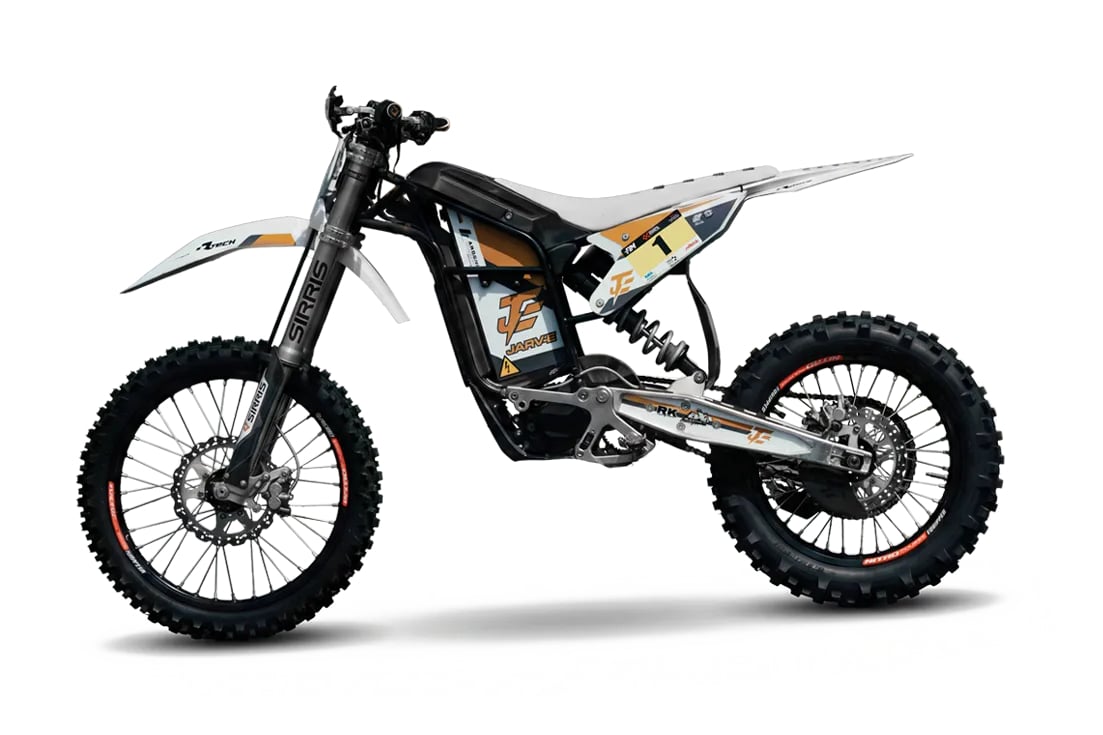
So when can you get one yourself? Well, the first production run has been limited to just 100 units. These bikes have been dubbed the “Graham Jarvis Signature Raw” edition and will include CNC-machined components like the swingarm and triple clamps. Jarv-E is currently taking deposits on those machines, and $4,143 gets you on the waiting list. The full price for the Signature Raw Jarv-E is estimated at around $13,900, depending on final components, taxes, VAT, etc.
If everything is as it seems on paper, the Jarv-E certainly looks poised to be the hard enduro favorite if battery power is your preference. With premium components, ample power, and a roughly 50-pound weight advantage over the current industry-leading Stark Varg EX, the machine has everything it needs to succeed in the rough stuff. We’re looking forward to seeing what the specs (and pricing) look like on the “standard” edition bikes to follow, so stay tuned for more.
2026 Jarv-E Electric Hard Enduro Motorcycle Specs
Peak power: 50kW (67 hp)
Wet weight: 99 kg (218 lbs)
Battery capacity: 7.3 kWh
Max Claimed Runtime: 5 hours
Charging capacity: 3.4 kW fast charging
Front Suspension: Sirris F43 Fork, fully adjustable
Rear Suspension: Sirris R46 shock, fully adjustable
Wheels front/rear: 21″/ 18″
Frame: Chromoly Steel Tube
Seat Height: 900-920mm
Wheel Base: 1450mm