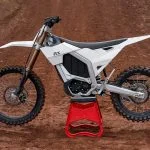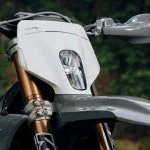
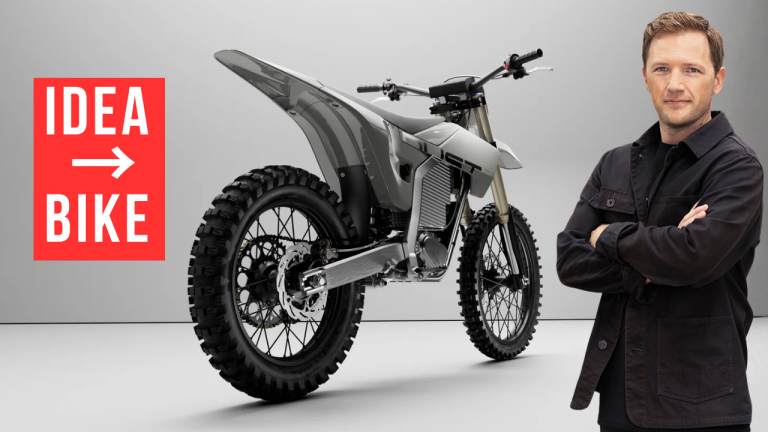

The Dust Moto Hightail is shaping up to be one of the most closely watched electric dirt bikes heading into 2026. In this episode, we sit down with Colin Godby, founder and CEO of Dust Moto, to talk through the Hightail’s development, where the bike currently stands in production, and why Dust has taken such a public approach to building a new electric motorcycle company.
A major part of the discussion centers around Dust Moto’s unusual level of transparency. Unlike most brands, which typically keep development private until a bike is nearly ready for release, Dust has shown much of the Hightail’s evolution in public. Colin explains that this was a deliberate choice, both to build trust with riders and to give people a better understanding of what it actually takes to develop a motorcycle from the ground up. At the same time, he acknowledges the downside: showing the full process can create unrealistic expectations around timing, especially when most consumers are not used to seeing how long true R&D and validation actually take.
Production timing is one of the biggest topics in the conversation. According to Colin, Dust is now in the final stages of validation, with production-intent gamma bikes being assembled from tool-off parts and final vendor components. The company has already moved through alpha and beta phases, with the alpha serving as a proof-of-concept platform and the beta introducing a much more developed powertrain, chassis, and overall fit and finish. Gamma is intended to represent the finalized production design, with testing and validation now focused on locking in the bike before assembly ramps up for customer deliveries. Dust’s current target remains Q1 to Q2 for early bikes to begin rolling out to crowdfunding customers and preorder holders.
The interview also dives into where and how the Hightail will be built. Dust plans to handle final assembly in Bend, Oregon for its early production batches, allowing the team to maintain tighter quality control as the first bikes come together. However, Colin makes an important distinction around Dust’s positioning as an American brand. Rather than claiming the bike is fully made in the USA, he explains that Dust intends to build in America while sourcing many major components from Taiwan. That includes key parts of the battery, motor, and supply chain, which he says are currently difficult or impractical to localize in the United States at startup scale. Taiwan was chosen both for quality and for strategic reasons, including supply chain maturity and the ability to source from allied countries for future military and special-use applications.
Another key theme is how much the Hightail has evolved since Dust first began the project in 2023. Colin explains that the original target was closer to what a modern Ultra Bee represented in terms of overall performance, but as the market changed and competition intensified, Dust adjusted the bike’s positioning. The result is a platform designed to land somewhere between the latest crop of lightweight electric bikes and a full motocross machine. Colin describes it as sitting closer to the moto side of the spectrum, with more durability, stronger real-world performance, and a higher ceiling than many bikes currently entering the midsize electric dirt bike category.
In terms of performance, Dust says the Hightail has dynoed at more than 42 horsepower at the wheel, which Colin notes would translate to over 50 horsepower the way many brands choose to advertise. Torque is claimed at over 700 Nm at the wheel, with a 4.4 kWh battery using power-oriented cells capable of delivering very high sustained current. Rather than chasing inflated headline numbers, Colin argues that the company has focused on building a bike with usable, repeatable power that performs consistently on real terrain. Throughout the conversation, that becomes a major philosophical difference: Dust is less interested in spec-sheet wars and more interested in delivering a bike that feels powerful, controllable, and durable in actual riding conditions.
The sizing and layout of the Hightail are also an important part of the discussion. Dust’s goal was to create a bike that feels more approachable than a traditional full-size 250 or 450, while still offering enough performance and chassis capability for serious riders. Colin describes the Hightail as a platform with a full-size rider triangle but lower intimidation and more playful handling, aimed at bridging the gap between lightweight eMoto bikes and conventional gas dirt bikes. The company sees that midsize category becoming increasingly important as younger and newer riders begin on smaller electric bikes and eventually need a more capable next step.
That broader market shift becomes another major topic. Colin agrees that 2026 is shaping up to be a huge year for midsize electric dirt bikes, but says the arrival of more competition does not change Dust’s plan. Instead, it reinforces that the company identified a real gap in the market. He believes the Hightail can still stand out as long as Dust delivers on its promises and avoids the common trap of overclaiming or shipping a bike that falls short of expectations. The company is also already thinking beyond a single off-road model, with future options potentially including road-legal variants, aftermarket lighting kits, and additional products in both smaller and larger size classes.
Racing also comes up in the interview, though Dust’s stance is different from brands that define themselves entirely around competition. Colin says Dust is not trying to become a race-only company, but still sees racing as an important part of proving the bike and building credibility. The team expects the Hightail to be capable in amateur motocross, hard enduro, and other regional racing environments, but the broader goal is to create a brand that is accessible and desirable beyond the sharp end of competition.
Overall, the conversation paints the Dust Moto Hightail as a bike that is much closer to production than many people may realize, while also giving helpful context for why the final stretch of development takes time. If you’re interested in the future of midsize electric dirt bikes, real-world production timelines, American assembly strategy, and how the Dust Moto Hightail fits into the rapidly evolving 2026 eMoto market, this episode offers one of the clearest looks yet at where the project stands today.