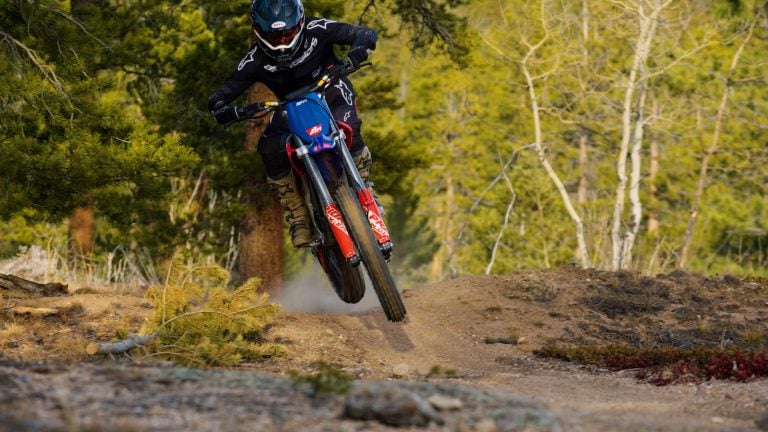

If you’ve been following the news lately, chances are you’ve noticed an unsettling trend: Local laws are bringing a chokehold to the eMoto scene, and many are voicing valid concerns that regulations on electric dirt bikes (and even some of their eBike cousins) could spell disaster for the industry as a whole.
Now, before we get into the details, we’ll be the first to admit that many eMotos have been operating in what we should all agree is a legal “grey area.” It’s not uncommon to see someone commuting to and from work in the city on something Surron-adjacent, whether that’s on surface streets, in bike lanes, or on sidewalks. Try that on a Temu pit bike, and chances are you’ll run into a lot more pushback from private citizens and local law enforcement alike.
In the not-so-distant past, this grey area was occupied by modified bicycles powered by gas engines. The original “Motoped” was a great, albeit extreme, example of this: the vestigial pedals were still there, and technically you could still move the bike via pedal power, but we all knew the whole point was to have a lightweight motorcycle without needing to adhere to motorcycle laws and regulations.
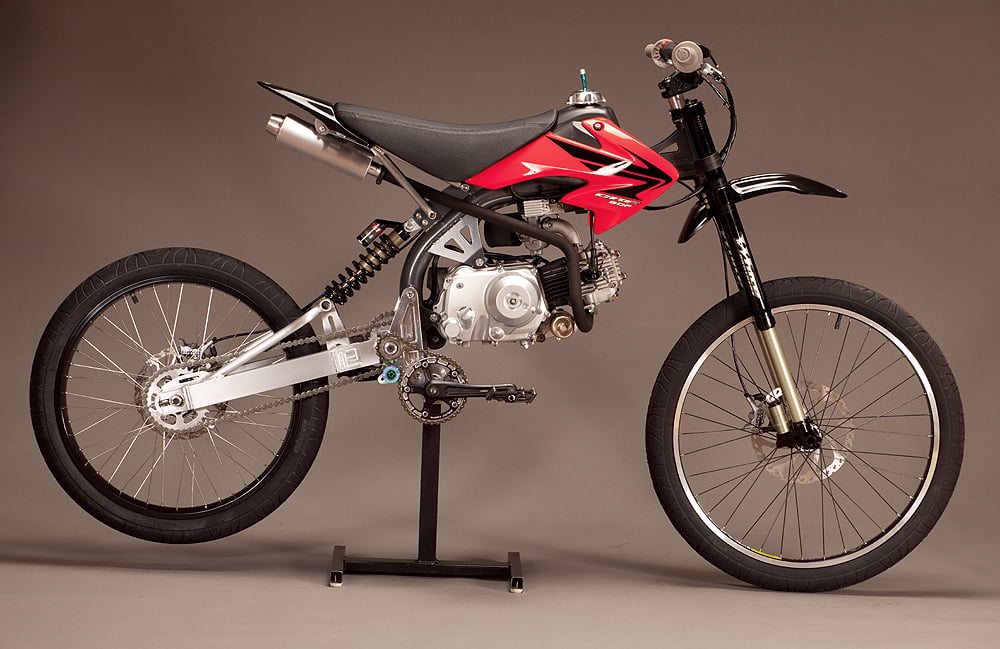
It was fun while it lasted, but before long, almost every state had introduced legislation to keep machines like these from becoming a nuisance on public roads and bikelanes. And, in a nutshell, that’s exactly the sort of growing pains eMotos are going through now.
A few headlines in particular have caught our interest of late. The first, and most significant, comes right from where you’d expect it, the great state of California. This new law, passed back in November of 2025, directly takes aim at eMotos, so we’ll start there.
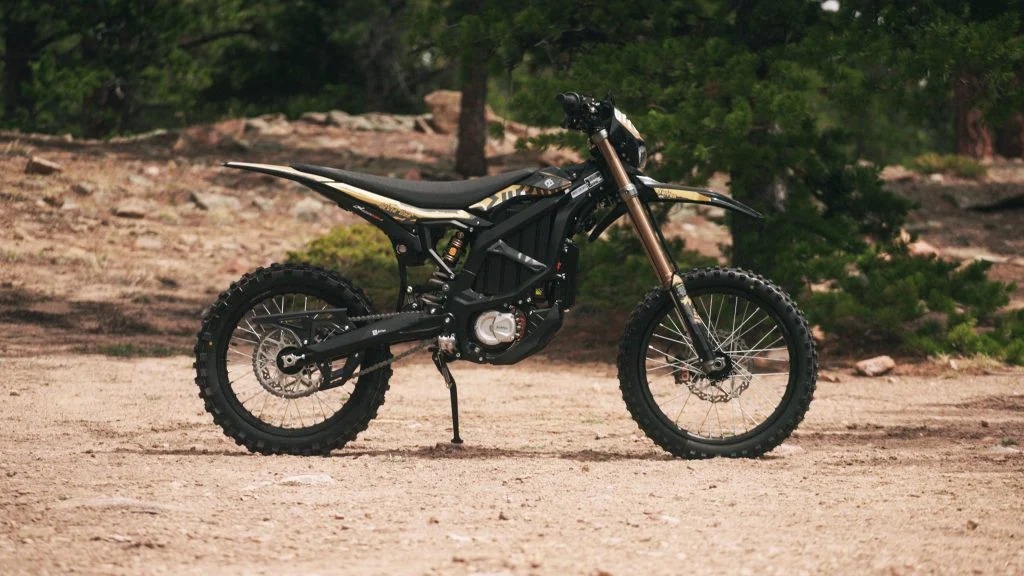
In a new regulation filed under California’s “Section 436.1,” any two-wheeled vehicle with handlebars, a straddled seat, and an electric motor that’s designed “primarily for off-highway use” has now been classified as an off-highway motorcycle. In other words, if you can’t do it on a YZ250, you can’t do it on a Surron. There’s still some grey area left for eBikes with factory pedals, which are considered “mopeds” under California state law, but even those require a motorcycle license and a helmet, and are limited to no more than 4 gross brake horsepower.
As such, riding a Surron or any other non-registerable eMoto on the streets, sidewalks, or bike lanes in California is now 100% illegal. It also means riding one without a helmet is illegal, and that the power of the electric motor, no matter how big or small, has no bearing on the bike’s legal status.

It also means that operating an eMoto off-highway now requires DMV approval and the same green/red sticker registration for use on public lands. Privately owned tracks and off-road parks are still fair game, but state trail systems of any kind are a no-go until Uncle Sam signs off on your bike and collects his fee.
The second piece of electric dirt bike regulation comes from the state of Washington, specifically House Bill 2374 and Senate Bill 6110. In these bills, the state wants to define both eMotos and high-powered eBikes as separate forms of transportation from your typical Class 1 and Class 2 eBike, and is even going so far as to declare a state of emergency in their growing popularity among “teenagers and young adults.” Under this bill, any electric two-wheeler without functional pedals would be considered a motorcycle, and any eBike that’s either throttle-powered beyond 20 mph or has a motor over 750 watts would also be treated as a full-blown eMoto.
These bills go on to recommend establishing a regulatory framework for both types of high-powered electric bikes, and consider what penalties and restrictions should follow. Perhaps even more interesting is the language in the bills targeting electric bike manufacturers and vendors, which would require them to disclose the legal class of bike they’re selling to consumers, and to pay penalties for any “deceptive marketing practices.”

Of course, the Washington bill is currently just a proposal, and will take some time to actually be formed into something concrete. If you’re curious as to just how poorly your local bureaucrats can fumble a bill, however, you need look no further than the state of New Jersey, which signed the most restrictive eBike legislation in the country into law just last month.
The New Jersey bill, S-4834, was introduced back in November and fully passed into law in under three months. The new bill removes the previous “class 1-2-3” designations for eBikes, and lumps all eBikes into one of three categories: Low-speed electric bicycles, motorized bicycles, and motorcycles.
To fall in the first camp, low-speed electric bicycles, your eBike must have fully operable pedals, no throttle, and must cut all motor assistance at 20 mph. Assuming you meet all those requirements, you’ll be required to register your eBike with the DMV, carry a valid driver’s license or permit, and be over the age of 15.

Throttle operated ebikes, or those with any form of assistance between 21-28 miles an hour, are now classified as electric motorized bicycles, and carry the same requirements as a 49cc moped. Chief among them is a requirement to carry liability insurance and wear a DOT-approved helmet at all times. Both types of bikes will require a yearly registration renewal fee just like any car, truck, or motorcycle. Any eBike exceeding that description is now classified as a full-blown motorcycle, meaning it will require lights, mirrors, signals, a license plate, and everything else that comes with the territory.
There’s a lot more to the new bill than that, and many eBike owners and vendors are waiting in disbelief for further clarification on the new rules. New Jersey was kind enough to issue a six month grace period for all parties involved to comply, but the implications of getting eBikes registered alone is enough to make your head spin.
Aaaaand if that wasn’t bad enough, the bill also sneaks a final paragraph into law that puts an immediate ban on selling “electric motorized bicycles” online for a full year. That mean’s the future of direct to consumer purchases of these bikes in the state of New Jersey is uncertain at best, and could be fully outlawed after further review.
It’s all very new and, admittedly, way above our heads in terms of legal-ese, but the message is clear: For better or worse, crackdowns are on their way in multiple states, and their repercussions could effect everyone involved, from manufacturers all the way down to end users.
We’ve got a few takes on what it all means, so we’ll leave you with some food for thought.
Here at ECR, we’re very much a dirt-focused brand, but there’s no denying that a lot of folks are out enjoying powerful eBikes and eMotos on the street. We’d wager much of this legislation stems from those packs of rabid 14-year-olds we all see prowling the streets on hopped-up Surrons and the like, but that phenomenon comes with a few questions of its own.
On the one hand, we should all want to see more kids out on bikes enjoying the thrill of two wheels. At this point, we’ll take just about anything requiring them to be outdoors without their faces glued to their iPhones.
On the other, we all want our kids to be safe, and blasting around public roads at 50mph without a helmet is probably not something we want them doing. You’ve gotta draw the line somewhere, but putting a three-year-old’s Stacyc in the same class as a Varg MX reeks of bureaucratic overreach courtesy of your local fun police.
Could sweeping legislation that impacts adults and minors, or even eBikes and eMotos equally be the fix we need? Probably not. Could holding grey area manufacturers and importers of eBikes and eMotos accountable have a positive impact on the industry? Unfortunately, that’s a tougher question to answer, but it’s hard to imagine it will make electric dirt bikes or anything but the most basic eBikes any more accessible or affordable.